
Are oral probiotics and gum probiotics the same? Let’s clear up the confusion.
When people hear the word probiotics, they usually think about digestive health first.
So when they hear the term oral probiotics, many wonder, “Are there probiotics for your mouth too?”
Things become even more confusing because pharmacies and online stores use different names such as oral probiotics, gum probiotics, and oral probiotics supplements.
At first, I also wondered, “Are these all different products?”
After searching online, I found that many explanations were slightly different, which only made things more confusing.
The simple answer is that oral probiotics and gum probiotics are generally used to describe the same type of product.
To explain it a little more accurately:
- Oral probiotics is a broad term referring to probiotics designed to support the overall health of the mouth.
- Gum probiotics is often a marketing term that emphasizes support for healthy gums.
In other words, they are usually different names for the same category of products, rather than completely different types of probiotics.
Why Are There So Many Different Names?
The biggest reason is that different products focus on different benefits.
Some products emphasize:
- Fresh breath support
- Gum health
- Maintaining a balanced oral environment
Because of these different marketing focuses, manufacturers often give similar products different names.
In fact, it’s common to find products labeled as oral probiotics while their advertisements also describe them as gum probiotics.
How Are They Different from Digestive Probiotics?
This is one of the most common questions.
Digestive probiotics are designed to work primarily in the intestines.
Oral probiotics, on the other hand, are intended to help maintain a healthy balance of bacteria inside the mouth.
That’s why many oral probiotics are made as slow-dissolving tablets or lozenges instead of capsules that are swallowed immediately.
The longer they remain in the mouth, the more opportunity they have to interact with the oral environment.
The Name Isn’t the Most Important Thing
Choosing a product based only on whether it says oral probiotic or gum probiotic isn’t the best approach.
What’s much more important is:
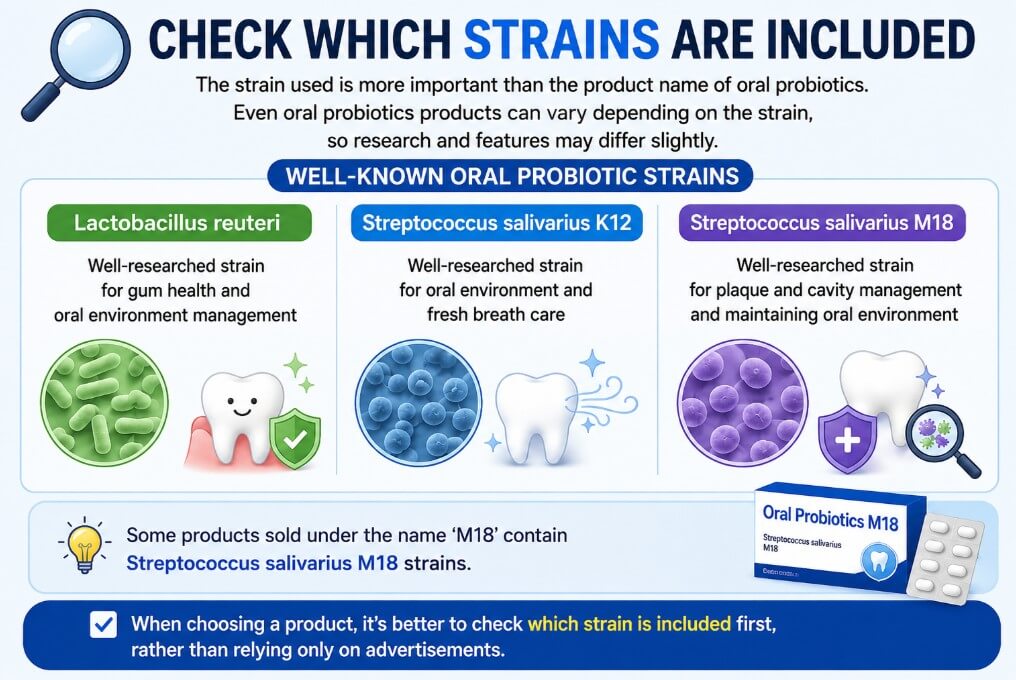
- Which probiotic strains are included
- What purpose the product was designed for
Some products are formulated mainly for fresh breath, while others focus on supporting healthy gums or maintaining a balanced oral microbiome.
Because of this, two products with similar names may contain completely different strains and offer different intended benefits.
Beneficial Bacteria Live in Your Mouth Too! How Do Oral Probiotics Work?
“Are there really beneficial bacteria living in our mouths?”
The answer is yes.
Hundreds of different microorganisms naturally live inside the mouth. Together, they form what is known as the oral microbiome (oral microbial community). Not all of these microorganisms are harmful—some are beneficial, while others can contribute to oral health problems.
Under normal conditions, these microorganisms remain in balance. However, when that balance is disrupted, various oral health issues may begin to develop.
What Happens When Harmful Bacteria Increase?
When brushing is inconsistent or the mouth becomes dry, harmful bacteria can multiply more quickly.
As these bacteria accumulate, they form a sticky film on the surface of the teeth known as dental plaque.
If plaque is not removed regularly, it may contribute to gum inflammation and, over time, increase the risk of periodontal (gum) disease.
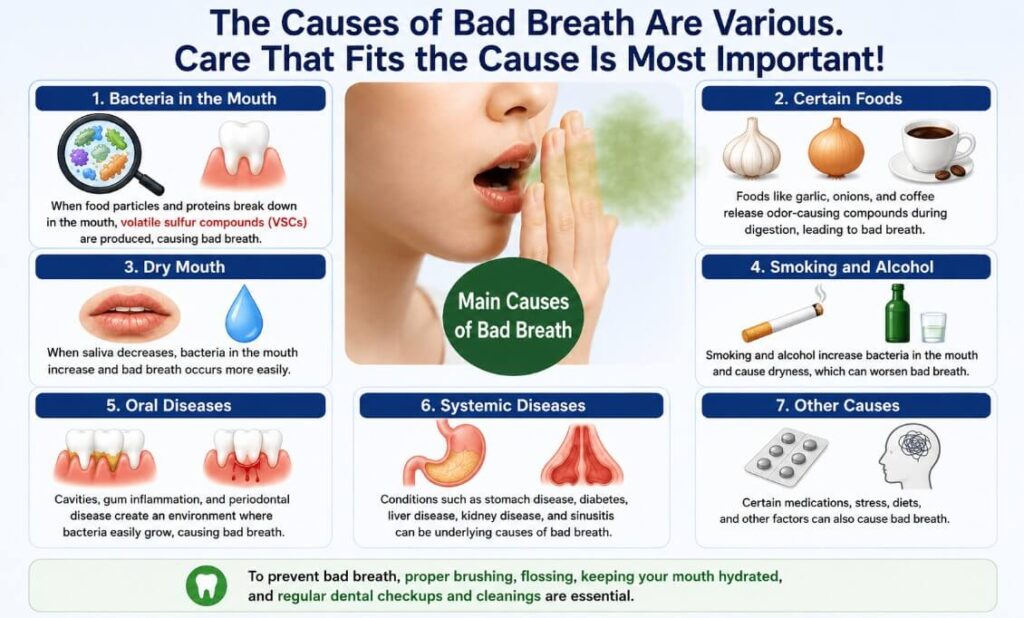
Some oral bacteria also produce volatile sulfur compounds (VSCs), which are one of the common causes of bad breath.
This is why many people begin paying closer attention to their oral health when they notice persistent bad breath or swollen gums.
What Do Oral Probiotics Do?
Oral probiotics are not medicines that cure cavities or gum disease.
Instead, they are designed to help beneficial bacteria establish themselves in the mouth, supporting a balanced oral environment.
Simply put, when beneficial bacteria become more established, it may become more difficult for harmful bacteria to multiply excessively.
For this reason, oral probiotics are commonly used as a supportive approach for maintaining fresh breath and overall gum health.
How Are They Different from Digestive Probiotics?
Many people wonder whether taking regular digestive probiotics provides the same benefits.
The answer is not exactly.
Digestive probiotics are formulated to survive the digestive system and work primarily in the intestines.
Oral probiotics, on the other hand, are designed to remain in the mouth and support the oral microbiome.
That’s why many oral probiotics are made as slow-dissolving tablets or lozenges, allowing them to stay in the mouth longer instead of being swallowed immediately.
Can Oral Probiotics Replace Brushing?
This is another very common question.
The answer is no.
Oral probiotics are intended as a supportive tool for oral care, not a replacement for proper oral hygiene.
Brushing your teeth, flossing, and having regular professional dental cleanings remain essential for maintaining good oral health.
Oral probiotics may provide additional support when used alongside these healthy daily habits.
Beneficial and harmful bacteria naturally coexist in the mouth, and problems such as bad breath or gum discomfort can develop when that balance is disturbed.
Oral probiotics and gum probiotics may help support a healthier oral environment, but they are not treatments for dental disease. They are best understood as part of an overall oral care routine rather than a substitute for professional dental care.
Do Oral Probiotics Really Work? Myths and Facts About Gum Probiotics
“Do oral probiotics really work?”
Advertisements sometimes make it sound as if oral probiotics can completely eliminate bad breath or instantly improve gum health.
However, it’s important to understand what they can realistically do—and what they can’t.
Why Are People Interested in Oral Probiotics?
Hundreds of different bacteria naturally live in the mouth.
Some of these bacteria contribute to plaque formation, gum inflammation, and bad breath.
Oral probiotics are designed to help beneficial bacteria establish themselves, supporting a healthier balance within the oral microbiome.
Their goal is not to eliminate all bacteria, but to help maintain a balanced and healthy oral environment.
What Benefits Can You Expect?
Research suggests that certain oral probiotic strains may help support:
- Fresh breath
- Healthy gums
- Plaque management
- A balanced oral microbiome
However, results vary from person to person.
The specific probiotic strain used and an individual’s oral health condition can both influence the outcome.
Common Misconceptions
There are many misunderstandings about oral probiotics.
“Can oral probiotics cure cavities?”
No.
Once a cavity has formed, probiotics cannot repair or remove it.
Dental treatment is necessary.
“Can they cure gum disease?”
No.
Oral probiotics are not medications.
They may help support gum health, but they are not a treatment for gingivitis or periodontal disease.
If your gums continue to bleed, swell, or become painful, you should visit a dentist.
“Can they replace brushing?”
Again, the answer is no.
Oral probiotics cannot replace brushing, flossing, or regular professional dental cleanings.
They should be viewed as an additional part of an overall oral care routine.
Healthy Habits Matter Too
Taking oral probiotics alone will not automatically improve your oral health.
Healthy daily habits remain essential, including:
- Brushing your teeth two to three times a day
- Using dental floss or an interdental brush
- Drinking enough water to prevent dry mouth
- Visiting your dentist regularly for checkups and professional cleanings
- Reducing smoking and excessive sugar intake
When these habits are combined with oral probiotics, they may provide greater support for maintaining a healthy oral environment.
Oral probiotics and gum probiotics may help support fresh breath and healthy gums, but they are not treatments for dental disease.
Instead of relying on advertising claims, it’s better to understand what the product is designed to do and choose one that matches your oral health needs.
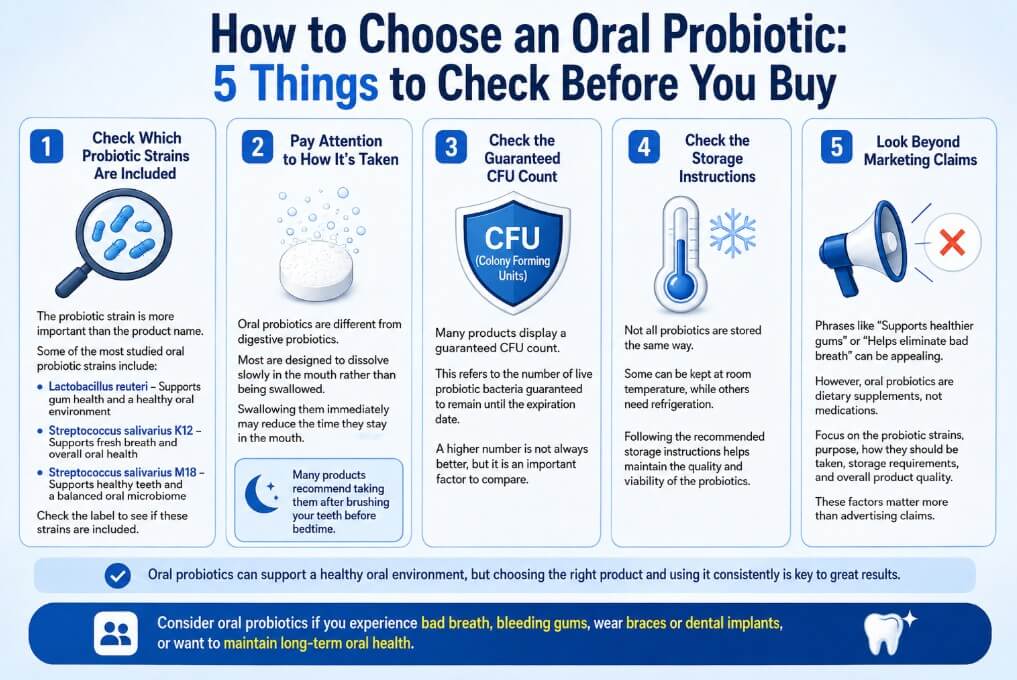
How to Choose an Oral Probiotic: 5 Things to Check Before Buying
① Check Which Probiotic Strains Are Included
When choosing an oral probiotic, the probiotic strain is more important than the product name.
Even products marketed as oral probiotics can differ significantly depending on the strains they contain.
Some of the most widely studied oral probiotic strains include:
- Lactobacillus reuteri – Studied for supporting healthy gums and maintaining a healthy oral environment.
- Streptococcus salivarius K12 – Researched for supporting fresh breath and overall oral health.
- Streptococcus salivarius M18 – Studied for helping maintain healthy teeth and a balanced oral microbiome.
When comparing products, it’s a good idea to check whether these strains are listed on the label.
② Pay Attention to How It’s Taken
Oral probiotics are taken differently from digestive probiotics.
Most products are designed to dissolve slowly in the mouth rather than being swallowed immediately.
Swallowing them right away may reduce the amount of time the probiotics remain in the mouth.
Many manufacturers recommend taking oral probiotics after brushing your teeth before bedtime, so always follow the directions provided with the product.
③ Check the Guaranteed CFU Count
Many probiotic products display a guaranteed CFU (Colony Forming Units) count.
This refers to the number of live probiotic bacteria guaranteed to remain until the product’s expiration date.
A higher CFU count does not always mean a better product, but checking this information is still an important part of comparing different options.
④ Check the Storage Instructions
Not all probiotics are stored the same way.
Some products can be kept at room temperature, while others require refrigeration.
Following the recommended storage instructions helps maintain the quality and viability of the probiotics.
⑤ Look Beyond Marketing Claims
It’s easy to be attracted by phrases like:
- “Supports healthier gums”
- “Helps eliminate bad breath”
However, oral probiotics are dietary supplements, not medications.
They should not be expected to prevent or treat diseases.
Instead of focusing only on advertising claims, compare products based on:
- The probiotic strains used
- Their intended purpose
- How they should be taken
- Storage requirements
- Product quality
Who May Benefit from Oral Probiotics?
Oral probiotics may be worth considering if you:
- Frequently experience bad breath
- Notice bleeding gums when brushing
- Wear braces or have dental implants that require extra oral care
- Want to maintain long-term oral health
However, if you have severe gum swelling, persistent pain, or ongoing bleeding, it’s important to visit a dentist before relying on any oral probiotic supplement.
When Should You Take Oral Probiotics? The Best Way to Get the Most from Gum Probiotics
When Is the Best Time to Take Oral Probiotics?
Oral probiotics are different from regular probiotics that are swallowed with water.
Most oral probiotics are designed to dissolve slowly in the mouth, so they are generally most effective when taken with a clean mouth.
For this reason, many manufacturers recommend taking them after brushing your teeth before bedtime.
Since you typically don’t eat while sleeping, the probiotics may remain in your mouth longer and have more time to interact with the oral environment.
Taking them in the morning or during the day is not necessarily ineffective, but following the instructions provided with your product is recommended.
Can You Swallow Them with Water?
Most oral probiotics are intended to dissolve slowly in the mouth.
Swallowing them immediately may shorten the amount of time they stay in contact with the oral environment.
Because instructions may vary by product, always follow the manufacturer’s directions.
Should You Take Them Before or After Brushing?
This is another common question.
In general, oral probiotics are recommended after brushing your teeth.
Taking them after cleaning your mouth may provide a more favorable environment than taking them while food particles are still present.
However, always follow the instructions provided with your specific product.
What If You’re Taking Antibiotics?
Antibiotics can affect beneficial bacteria as well as harmful bacteria.
For this reason, many experts recommend taking oral probiotics 2–3 hours apart from antibiotics.
If you are currently receiving treatment or taking prescription medications, consult your doctor or pharmacist before using oral probiotics.
How Long Should You Take Them?
Oral probiotics are not products that produce immediate results after just a few doses.
Results vary depending on your oral health and daily habits.
Consistency is important, and it’s best to follow the recommended daily serving listed on the product.
Are Oral Probiotics Alone Enough?
Unfortunately, no.
Daily oral hygiene habits remain the foundation of good oral health.
Even the best oral probiotic cannot replace proper brushing, flossing, or regular dental checkups.
When combined with good oral care habits, oral probiotics may provide additional support for maintaining a healthy oral environment.
The most important factor is how you take them, not simply when you take them.
Allow them to dissolve slowly in your mouth, follow the product instructions carefully, and use them consistently as part of your daily oral care routine.
Frequently Asked Questions About Oral and Gum Probiotics
Q1. Are oral probiotics and gum probiotics different products?
No.
They are generally different names for the same type of product.
Oral probiotics is a broader term referring to probiotics that support overall oral health, while gum probiotics usually emphasizes gum health.
Q2. Can oral probiotics eliminate bad breath?
They may help if bad breath is related to oral bacteria.
However, if bad breath is caused by cavities, gum disease, tonsil stones, digestive disorders, or other medical conditions, the underlying cause should be treated first.
Q3. Can oral probiotics treat gum disease?
No.
Oral probiotics are not medications.
They may help support a healthy oral environment, but they do not treat gingivitis or periodontal disease.
Q4. Can regular digestive probiotics provide the same benefits?
Not usually.
Digestive probiotics are designed to work primarily in the intestines, while oral probiotics are formulated to support the oral microbiome.
They serve different purposes.
Q5. Can children take oral probiotics?
It depends on the product.
Some oral probiotics are formulated for children, while others are intended only for adults.
Always check the recommended age and usage instructions before giving them to a child.
Q6. Can I take them if I have braces or dental implants?
Many people with braces or dental implants choose oral probiotics as part of their oral care routine.
However, you should continue following your dentist’s recommendations throughout your treatment.
Q7. How long should I continue taking them?
The recommended serving size and duration vary by product.
Rather than expecting immediate results, consistent use over time is generally recommended.
Q8. Are there any side effects?
Most people tolerate oral probiotics well.
However, some individuals may experience temporary oral discomfort or mild digestive symptoms.
If symptoms persist, stop using the product and consult a healthcare professional.
Q9. Are more expensive products always better?
Not necessarily.
Instead of focusing only on price, consider:
- The probiotic strains used
- The guaranteed CFU count
- Product quality
- Storage requirements
- Recommended usage
Q10. Can oral probiotics replace brushing?
No.
Brushing, flossing, and regular professional dental cleanings remain the most important parts of maintaining good oral health.
Oral probiotics should be viewed as a supportive addition to a proper oral hygiene routine, not a replacement for it.